Industrial gearboxes, a key component of power transmission systems, play a crucial role in various industries. By varying speed and torque, these gearboxes contribute to increasing the efficiency and productivity of industrial plants. This article examines their manufacturing methods, processes, and technologies, as well as their significance.
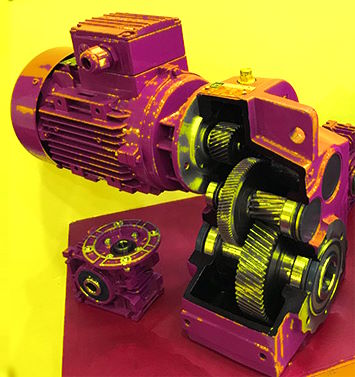
Definition of industrial gearbox
What is an industrial gearbox?
An industrial gearbox is a mechanical device used to change speed and torque in a power transmission system. It consists of gears, shafts, bearings, and a housing, which together ensure optimal transmission of mechanical motion.
The importance of industrial gearboxes
Industrial gearboxes play a key role in increasing the efficiency and performance of industrial plants. They contribute to higher productivity , reduced maintenance costs, and extended plant lifespan. Furthermore, they enable more precise control of production processes and energy transmission .
Manufacturing process of industrial gearboxes
1. Design and Development
The first phase of industrial gearbox manufacturing is the gearbox design and development. In this phase, the gearbox requirements, its technical specifications, and the expected performance are analyzed . Engineers use a CAD (Computer-Aided Design) system to create and simulate a 3D model of the gearbox.
2. Material selection
Selecting the right materials for transmission components is crucial. These materials must possess the necessary mechanical, thermal, and chemical properties to withstand harsh operating conditions . Alloy steel, stainless steel, aluminum, and bronze are commonly used for transmission components.
3. Production process
3.1 Automation
Machining is a key process in the manufacture of transmission components. It includes cutting, turning, milling, and drilling metal parts to achieve precise shapes and dimensions. Computer numerical control machines (CNC machines) are frequently used for machining transmission components.
3.2 Education
Forging is a manufacturing process in which metal parts are shaped under pressure and high temperatures to achieve the desired form. This process improves the mechanical properties and increases the service life of transmission components.
3.3 Giessen
Casting is a process in which molten material is poured into a mold and cooled to form a gear component. This process is used to manufacture large and complex gear components.
3.4 Heat treatment
Heat treatment is a process in which metal parts are exposed to high temperatures to improve their mechanical and thermal properties . This process increases the hardness, durability, and strength of gear components.
4. Assembly
Once the components are manufactured, the gearbox can be assembled. Appropriate tools and equipment are used to join the various gearbox components. Precise assembly of the components is crucial for the gearbox’s optimal performance and efficiency.
5. Testing and quality control
The final stage of industrial gearbox manufacturing involves testing and quality control. During this phase, the finished gearboxes undergo various tests to ensure flawless operation and high quality. These tests include dimensional accuracy measurements, mechanical property testing, thermal testing, and leak testing.
New technologies in the production of industrial gearboxes
1. 3D printing
3D printing is a new technology used in the manufacturing of transmission components . It enables the production of complex and precise parts at lower costs and in less time. Furthermore, 3D printing contributes to waste reduction and increased production efficiency.
2. Advanced processing technologies
Advanced manufacturing technologies with computer-controlled (CNC) machines and automated systems improve the precision and quality of transmission components. These technologies enable the production of parts with tight tolerances and smooth surfaces.
3. Advanced welding techniques
Modern welding processes such as laser welding and friction welding improve the quality of joints and extend the service life of gearbox components. These processes enable the production of joints with excellent mechanical and thermal properties.
4. Use of modern materials
The use of modern materials such as lightweight metal alloys and composite materials improves the mechanical and thermal properties of transmission components. These materials enable the production of lighter and, at the same time, more stable components.
Application of industrial gearboxes
1. Automotive industry
In the automotive industry, industrial gearboxes are used for power transmission and for controlling vehicle speed and torque. These gearboxes improve vehicle efficiency and performance.
2. Mining industry
In mining, industrial gearboxes are used to transmit power to heavy machinery such as trucks, excavators, and drilling rigs. These gearboxes improve the efficiency of mining equipment and reduce maintenance costs.
3. Oil and gas industry
In the oil and gas industry, industrial gearboxes are used to transmit power to pumps, compressors, and drilling rigs. They improve the performance of the equipment and reduce operating costs.
4. Food and pharmaceutical industry
In the food and pharmaceutical industries, industrial gearboxes are used to transmit power to equipment used in the production and packaging of food and pharmaceutical products. They contribute to improving the quality and efficiency of the production process.
5. Energy industry
In the energy sector, industrial gearboxes are used for power transmission in turbines, generators , and other power generation plants. They contribute to increased efficiency and cost reduction in electricity generation.
In conclusion
As a core component of power transmission systems, industrial gearboxes play a crucial role in the efficiency and productivity of industrial plants. The manufacturing process for industrial gearboxes encompasses design, development, material selection, machining, molding, casting, heat treatment, assembly, testing, and quality control. The use of modern technologies such as 3D printing, advanced automation, modern welding processes, and advanced materials contributes to improving the quality and efficiency of industrial gearboxes. Their widespread application in various industries, including automotive, mining, oil and gas, food and pharmaceutical, and energy, underscores their importance. The use of appropriate methods and modern technologies improves the quality and efficiency of industrial gearboxes, thereby increasing productivity and reducing maintenance and repair costs.